
Amazon Subscribe & Save: When It Actually Saves Money and When It Does Not
Subscribe & Save can be useful for predictable household staples. It is a poor autopilot tool for everything else. Here is how to check the real delivery price, discounts, coupons, and cancellations before the box ships.
By SVR Deals
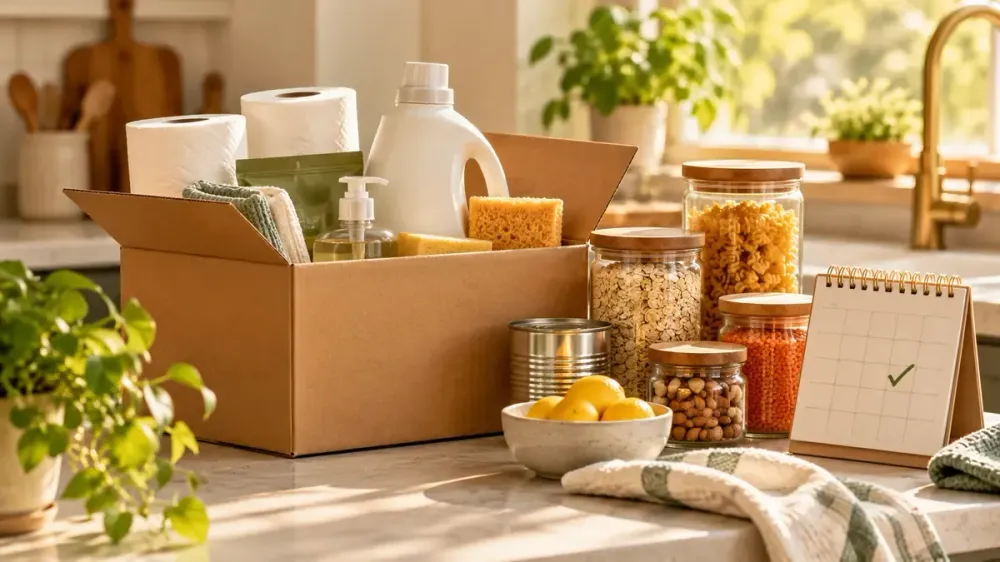
Subscribe & Save is a convenience program first
Amazon Subscribe & Save can lower the cost of things you already buy on a schedule. Think coffee filters, detergent, diapers, pet food, paper goods, or a skincare product you have used long enough to know you will finish.
It is not a promise that every future delivery will remain the best price. Amazon's own terms say price, discounts, availability, taxes, shipping charges, and even the seller can change between deliveries. Before a new order is filled, Amazon says it will notify you of the upcoming delivery price so you can change or cancel it.
That notification is the whole game. A subscription is only a deal when the next delivery still beats the price you could get by buying once somewhere else.
The short version
- Use Subscribe & Save for repeat purchases you would make anyway.
- Check the exact price in the next-delivery notice. Do not rely on the first-order price.
- A coupon may make the first shipment excellent and later shipments ordinary.
- A lower-priced seller or an out-of-stock item can affect the delivery.
- Cancel or skip with intention. A subscription is not a loyalty test.
How the discount really works
Eligible product pages show the subscription offer. The displayed discount can vary by item, seller, delivery frequency, and account. Amazon's seller documentation confirms that customers can receive a base discount on enrolled items and may unlock additional savings when five or more eligible items are scheduled for the same delivery day.
The practical implication is simple: do not build your budget around a headline percentage. Put the item in your subscription plan, then look at the price Amazon tells you it will actually charge for the upcoming delivery.
Some items also show a Subscribe & Save coupon. These are often most valuable on the first delivery. Treat a coupon as a one-time bonus unless the offer page clearly tells you otherwise. A product with a slightly lower subscription percentage plus a coupon can beat a product with a bigger-looking standard percentage.
A quick example
Say you buy a $24 package of coffee pods every five or six weeks. A 10% subscription discount would bring it to $21.60 before tax. If that price remains lower than your warehouse club, grocery sale, or one-time Amazon option, subscribing is sensible.
Now imagine the next-delivery price rises to $27 while the discount stays the same. The charged price becomes $24.30. The subscription has stopped doing useful work. Cancel it, skip it, or compare it against current alternatives.
That is not failure. That is exactly how the program should be used.
The five-item threshold is useful only when the items are real needs
Amazon says customers with five or more eligible items on the same delivery can receive tiered savings. That can help a household with several predictable consumables. It can also create a silly cart full of items you would not have bought without the threshold.
Do not add a marginal $8 item just to improve the discount on a $20 item. Work out the total cash outlay. If the extra item creates clutter, waste, or an unnecessary charge, the larger percentage is not a saving.
A sensible approach is to group only the recurring products you already have on a written shopping list. If you naturally reach the threshold, great. If you do not, use the base offer or buy elsewhere.
The settings worth checking before you forget about them
Delivery frequency
Choose the longest interval that matches how quickly you actually use an item. Buying too frequently is the most common way subscriptions become expensive. A two-month interval is easier to move earlier than it is to explain after three unopened boxes arrive.
Quantity
Start with one unit. Once you have seen two or three deliveries at a stable price, adjust quantity only if it makes storage and cash flow better. Bulk is not automatically cheaper when a product expires, changes formula, or sits unused.
Next delivery date
Amazon provides a deadline for changing the next order. Put a recurring reminder a few days before that deadline. Open the subscription page, check the price, and decide deliberately. It takes less than a minute once you have the habit.
Seller and item changes
Amazon's terms say a subscription may be fulfilled by the featured seller if your original seller is unavailable. That is a reason to be extra careful with consumables, branded goods, and anything where seller quality matters. If the listing, size, or seller looks different, do not assume it is equivalent.
When Subscribe & Save is genuinely good
It is strongest when all four are true:
- You buy the item repeatedly.
- You know roughly how fast you use it.
- The upcoming delivery price still beats realistic alternatives.
- You are willing to review the notice before it ships.
Pet food can fit this model well when your pet tolerates one formula and you track the delivery interval. So can diapers, contact-lens solution, pantry staples, and cleaning products.
When it is usually not worth it
Skip the subscription for products where the answer to any of these is yes:
- Would I buy this only because a coupon makes it look cheap?
- Do I still have too much of it at home?
- Is this likely to go on sale at a local store, warehouse club, or another retailer?
- Is the item seasonal, trend-driven, or something I am merely trying once?
- Would a price increase make me annoyed that the order shipped automatically?
Vitamins, beauty products, snacks, and household gadgets often fall into this category. They can be fine subscriptions, but only after a few normal purchases prove that the cadence is real.
A simple monthly review
Open your subscription page once per month and divide every item into three buckets:
- Keep: still used, still competitively priced, correct quantity.
- Skip: still useful, but you have enough on hand or the next date is too soon.
- Cancel: no longer used, price no longer competitive, or you only subscribed for an expired coupon.
This is more effective than trying to optimize each product in the moment. The goal is not to keep subscriptions. The goal is to make fewer bad automatic purchases.
Bottom line
Subscribe & Save earns its place for boring, predictable things. It loses its value when it becomes a background charge you do not review.
Use the next-delivery notice as the final price check. Keep only the subscriptions that still make sense at that moment. If the price moved, the coupon disappeared, or your pantry is full, skip or cancel without overthinking it.
Sources
Program terms and eligible-item discounts can change. Checked October 20, 2026.
A subscription that earns its place versus one that does not
| Compare | Keep it | Skip or cancel it |
|---|---|---|
| Usage | You reliably finish it on schedule | It piles up before the next delivery |
| Next price | Still beats realistic alternatives | Higher than a normal one-time purchase |
| Reason you subscribed | Convenience for a known staple | A first-order coupon or a threshold chase |
| Action | Keep the current cadence | Skip, move the date, or cancel |
Can I cancel Subscribe & Save after the first delivery?
Amazon says customers can cancel subscriptions at any time. Check the current order deadline before making a change so you know whether the next shipment can still be stopped or adjusted.
Does Subscribe & Save always have the lowest Amazon price?
No. The price, discounts, availability, and seller can change over time. Compare the price in the next-delivery notice with the current one-time price and other stores when the order is about to ship.